Backflow testing in San Diego: rules, cost, devices
San Diego requires annual backflow testing for irrigation, fire lines, and commercial properties. Rules by water agency, device types, and 2026 cost ranges.
The short answer
- San Diego County legally requires annual backflow testing if you have irrigation, a fire line, a pool, a well, or any commercial property.
- Miss the deadline and your water agency can shut off service; it is in the municipal code, not a scare tactic.
- The certified test takes 20 to 30 minutes and must be done by a certified backflow tester, not just any plumber.
- 2026 cost: $65 to $125 for a residential test; full device replacement runs from $450 up to $5,500 for a commercial 2 inch RP.
- Device types from cheapest to highest protection: AVB, PVB, DCVA, RP. Your agency dictates which one your property needs.
If you own a home with an irrigation system, a fire sprinkler line, a pool, a well, or any commercial property in San Diego County, you are legally required to test your backflow prevention device every year. The City of San Diego Public Utilities Department runs a Cross-Connection Control Program that enforces this. So do Helix, Otay, Sweetwater, Olivenhain, Padre Dam, Rincon del Diablo, and Vallecitos.
Miss the deadline and your water provider can shut off service. That is not a scare tactic. It is in the municipal code.
This guide walks through who has to test, what each agency requires, what the test actually checks, what the devices do, what testing costs in 2026, and what happens when a device fails.
Who must test their backflow device in San Diego
Backflow testing is required when your property has any cross-connection between potable water and a non-potable source. In plain English, anything that could let dirty water flow backward into the public supply.
The most common triggers in San Diego County:
- Irrigation systems with in-ground sprinklers, even small residential ones
- Fire sprinkler lines in homes, condos, and commercial buildings
- Commercial properties of any kind, including restaurants, salons, auto shops, medical offices
- Wells and auxiliary water sources on the property
- Swimming pools and spas with auto-fill lines
- RV hookups with potable connections
- Secondary meters for landscape or agriculture
- Multi-family buildings with shared water systems
- Boilers and recirculating hot water systems in larger homes and commercial buildings
If your property has any of these, your water agency already knows. They assigned your device a serial number when it was installed, and they send annual test notices to the property owner of record.
If you bought a house recently and you have not received a notice, that does not mean you are off the hook. Call your water agency and ask. The penalty for missing the test does not depend on whether you got the letter.
Backflow rules by water agency
San Diego County has eight major water agencies, plus a handful of smaller ones. Each one runs its own backflow program with its own deadlines, fees, and approved tester list. Here is how the main ones compare.
| Agency | Test deadline | Notice source | How to find your tester list |
|---|---|---|---|
| City of San Diego Public Utilities | Annual, due by date on notice | Cross-Connection Control Program | sandiego.gov/public-utilities backflow page |
| Helix Water District | Annual, anniversary of install | Helix billing dept | hwd.com customer service |
| Otay Water District | Annual, by Dec 31 most years | Otay water quality dept | otaywater.gov |
| Sweetwater Authority | Annual, rolling by zone | Sweetwater notice mailing | sweetwater.org |
| Olivenhain Municipal Water District | Annual | OMWD mailing | olivenhain.com |
| Padre Dam Municipal Water District | Annual | PDMWD notice | padredam.org |
| Rincon del Diablo Municipal | Annual | Rincon notice | rinconwater.org |
| Vallecitos Water District | Annual | VWD mailing | vwd.org |
If you are not sure which agency serves your property, check the water bill. The provider name is on the top of the statement. If you rent, ask the property owner, because the backflow obligation sits with the owner, not the tenant.
Each agency keeps a list of certified backflow testers. You can hire any tester on that list. The tester submits the report directly to the agency once the test passes. You should keep a copy for your records.
What a backflow test actually checks
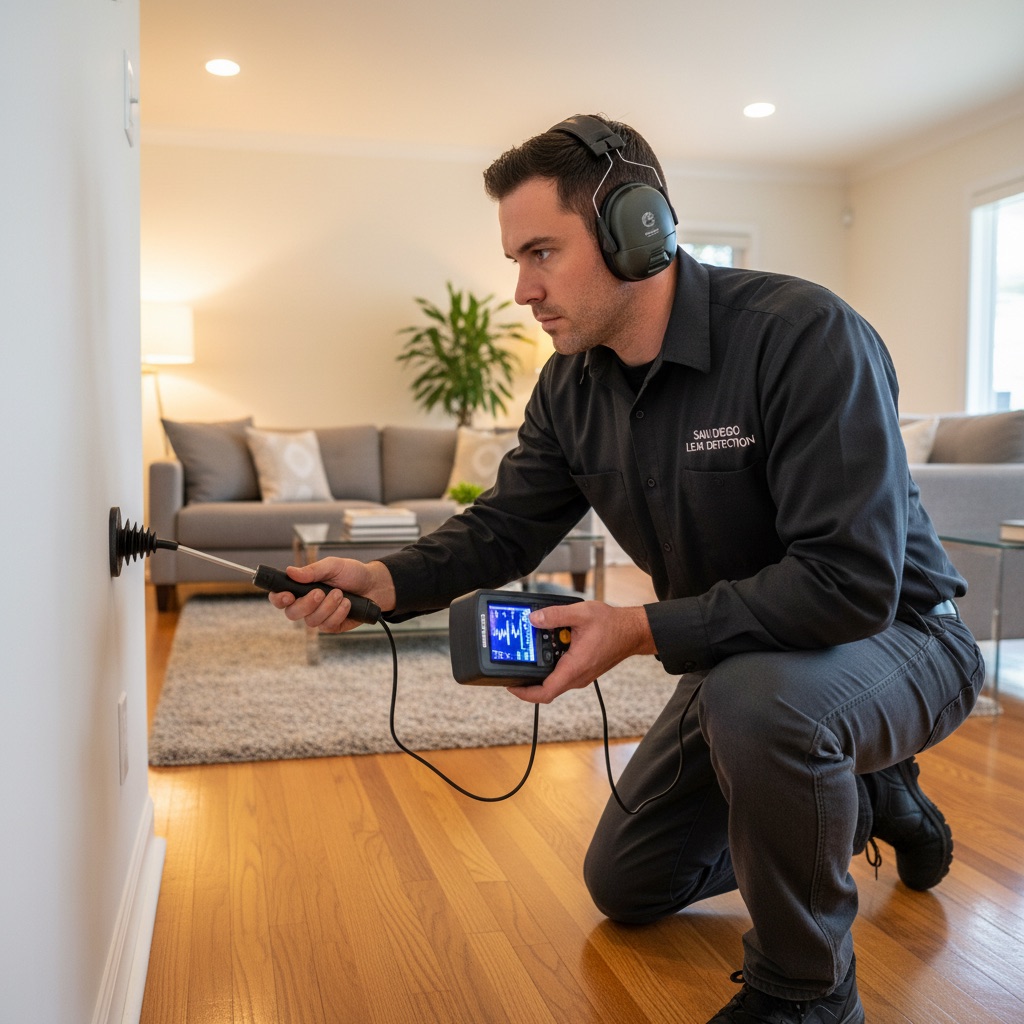
A backflow test takes about 20 to 30 minutes per device. The tester attaches a calibrated gauge to the test cocks on your assembly, then runs the device through three or four checks depending on the type.
The test verifies three things:
- Pressure differential. The device must hold a minimum pressure difference between its inlet and outlet checks. If pressure equalizes, the device is failing.
- Valve seating. The internal check valves have to seal tight against debris, scale, and wear. A leaking check fails the test.
- Shutoff integrity. The two ball valves on either end of the assembly must close completely. A passing valve seat can still mean a failing device if the shutoffs leak.
The tester logs results on a state-approved form and submits it to your water agency. If the device passes, you are done for the year. If it fails, repair or replacement is required within a window the agency sets, typically 14 to 30 days.
Types of backflow devices
Not every device is the same. The four types you see in San Diego protect against different hazards, and the agency dictates which one your property needs.
Reduced Pressure Principle Assembly (RP). The highest level of protection. Required for high-hazard cross-connections like commercial irrigation with chemical injection, fire systems with antifreeze, medical and dental facilities, car washes, and any property with a well or auxiliary water source. RPs have a relief valve that dumps water to atmosphere if the internal checks fail, which is why you see them with a drain or air gap. They are the most expensive to install, repair, and replace.
Double Check Valve Assembly (DCVA). Mid-level protection. Required for most residential irrigation, fire sprinkler systems without chemical additives, and many low-hazard commercial setups. Two independent check valves in series, no relief port. Cheaper than an RP, but not approved for high-hazard applications.
Pressure Vacuum Breaker (PVB). A spring-loaded check valve with an air inlet. Used for residential irrigation in many parts of San Diego County when the device sits above grade and 12 inches above the highest sprinkler head. Cannot be used where backpressure is possible, only backsiphonage. Less expensive than DCVA or RP.
Atmospheric Vacuum Breaker (AVB). Smallest and cheapest. Single-use, no test cocks, not testable. Used on individual hose bibs and some simple irrigation zones. Many older San Diego homes have these on outdoor faucets. They protect against backsiphonage only and have to be installed downstream of the last shutoff.
A licensed plumber can tell you which device your property needs and whether what is currently installed meets code. If a previous owner installed the wrong device, your agency will require a swap before they sign off on the next test.
Backflow testing cost in San Diego (2026)
Pricing varies by tester, by device size, and by how easy it is to access. Here is what we see across the county in 2026.
| Service | Typical cost |
|---|---|
| Residential annual test (1 device, 3/4” or 1”) | $65 to $125 |
| Commercial annual test (1 device, larger sizes) | $125 to $275 |
| Multi-device commercial test (per device after first) | $50 to $100 each |
| Repair kit for failed check valve | $150 to $400 |
| Relief valve repair (RP only) | $200 to $500 |
| Full device replacement, residential 3/4” PVB | $450 to $750 |
| Full device replacement, residential 1” DCVA | $700 to $1,200 |
| Full device replacement, residential 1” RP | $1,100 to $1,800 |
| Full device replacement, commercial 2” RP | $2,500 to $5,500 |
| Freeze damage repair (rare in SD, happens in inland areas) | $300 to $800 |
The annual test is the cheap part. The expense shows up when a device fails and needs parts or full replacement. RPs cost the most because they have more moving parts and stricter installation requirements, including a code-required air gap or approved drain.
If your device is over 15 years old and has failed two tests in a row, replacement is usually cheaper than another round of repair kits.
What happens if you fail or skip the test
This is where people get into trouble. The agencies are not aggressive about chasing you down with phone calls, but the consequences when they do act are real.
If your device fails the test. You get a written notice with a repair window, usually 14 to 30 days. You have to fix or replace the device and submit a passing test result before the window closes. Retesting after a repair runs $50 to $100 on top of the original test fee.
If you miss the annual test deadline. Most agencies send one notice, then a second notice about 30 days later. After that, they issue a final notice giving you 10 to 14 days. If you still do not test, they can shut off water service to the property under their cross-connection ordinance. Restoration requires a passing test plus a turn-on fee, typically $50 to $200.
If you remove or bypass the device. This is the one that gets people in real trouble. Removing a required backflow device is a code violation and, in commercial settings, can trigger health department involvement. The water agency will require reinstallation with a permit, plus penalties.
The shutoff process is rare for residential properties but routine for commercial ones. Restaurants, salons, and medical offices in San Diego get shut off every year for missing backflow tests. Do not assume the agency will not act.
Common failures and what they cost to fix
Most backflow devices in San Diego fail for one of four reasons.
Debris in the check valve. Sand, scale, or pipe shavings get caught between the check and its seat. The valve cannot close fully and the test fails. A repair kit and a flush usually fixes it. Cost: $150 to $300.
Worn check seat. The rubber seat that the check valve presses against gets compressed and cracked over time. Common on devices over 8 to 10 years old. Replacement seat plus labor runs $200 to $400.
Frozen test cocks or shutoffs. Rare on the coast, more common in Alpine, Ramona, Julian, and inland east county after a hard freeze. The brass cracks or the internals lock up. Cost: $250 to $600 depending on which parts cracked.
Corroded relief valve (RP only). The relief valve sits exposed to air and condensation. Over years, the brass and internal seat corrode. When it fails, the device dumps water continuously. Repair: $300 to $500. Replacement of the relief assembly: $500 to $900.
If you have a device that has failed and you want a straight quote, call us at (858) 925-5546. We will give you the repair number and the replacement number so you can decide which makes sense.
Frequently asked questions
Do I have to test my backflow device if my irrigation is turned off?
Yes. The device is registered to the water meter and the property. As long as the connection exists, the test is required. Disconnecting irrigation does not remove the obligation. Permanently removing the device requires a permit and a plumber.
Can my regular plumber test it, or does it have to be a certified tester?
It has to be a certified backflow tester. California requires a separate certification on top of a plumbing license. Most full-service plumbers in San Diego either have testers on staff or work with one. Ask before scheduling.
How long does the test take?
About 20 to 30 minutes for a residential device. Longer for larger commercial assemblies or sites with multiple devices.
My device is in a vault underground. Does that change anything?
It can. Underground vaults need to be drained and accessible before the tester arrives. If the vault is flooded or full of dirt, the tester cannot work, and you get charged for the trip. Pump out the vault first, or hire a plumber who handles both.
What is the difference between a backflow test and a backflow inspection?
The test is the certified annual procedure that the water agency requires. An inspection is a visual check of the device for damage, leaks, or installation issues, which a plumber might do as part of a general service call. The agency only accepts the certified test.
My water agency says I need an RP, but I already have a DCVA. Why?
A property change moved you into a higher hazard category. Common triggers: adding a well, installing a pool with auto-fill, switching to drip with fertilizer injection, opening a home business that handles chemicals. The agency reassesses based on what is connected, not what was approved years ago.
Need a tester or a repair quote
If your annual test is coming up, or your device failed and you need a repair or replacement quote, our backflow testing service covers San Diego County. Certified testers, real pricing, fast scheduling. Call (858) 925-5546 or send the device serial number from your notice and we will tell you what your agency is going to require.
Related reading:
Need a Plumber in San Diego?
Licensed, insured, and available 24/7 across San Diego County. Upfront pricing, no surprises.
Call (858) 925-5546Available 24/7, no voicemail, no answering service